Chernobyl Wildlife Forty Years On
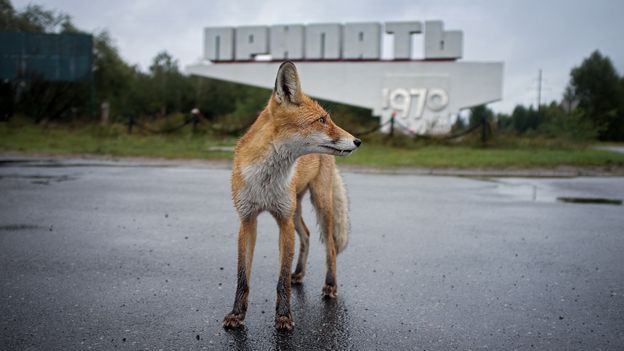
It's 40 years since the Chernobyl disaster. This is what it has meant for wildlife living around the devastated nuclear power plant.
Full article excerpt tap to expand
Surviving in a poisoned land: Chernobyl's wildlife is different, but not in the ways you might think15 hours agoShareSaveAdd as preferred on GoogleChris BaraniukGetty ImagesIt's 40 years since the Chernobyl disaster. This is what it has meant for wildlife living around the devastated nuclear power plant."Pa-pa-pa-pa-pa!" In the middle of the night, a noise from the darkness in the abandoned, irradiated landscape of Chernobyl. Pablo Burraco, a scientist, stepped quietly between the trees, not far from the ruins of the power plant at the centre of the world's worst nuclear disaster. In the aftermath of the catastrophic reactor explosion in 1986, the surrounding area was evacuated for many miles, so few people trod where Burraco now did.With only his head torch illuminating the ground before him, Burraco closed in on the source of the night-time racket – a tiny male tree frog, urgently calling for its mate. A swoop of his hand and he had plucked the 5cm-long (two inch) amphibian from its perch on a small tree.It was 2016. Burraco, an evolutionary biologist at Doñana Biological Station, a public research institute belonging to the Spanish National Research Council, was making his first field trip to this troubled part of the world.Peering at the creature now safely confined within the curl of his fingers, Burraco immediately noticed the frog was slightly dark in colour, unlike other frogs of the same species that lived further away. "It was super exciting," he says, recalling the moment. This frog raised a question that many have asked ever since the explosion at Chernobyl: had radiation from the stricken power station changed the creatures living near it? That's what Burraco wanted to find out.Four decades have now past since Chernobyl's reactor number four exploded on 26 April 1986, sending radioactive material far and wide. Winds eventually carried radioactive dust as far as the UK, Norway and even parts of North Africa. But the landscape immediately surrounding the power plant in northern Ukraine received the heaviest dose. Intense radioactive hotspots still persist today.Many feared the effect of such radioactive contamination would be devastating for the animals and plants living nearby. Almost all the humans in the surrounding area immediately left. These creatures could not. During the 40 years since the disaster, it has become clear that many species are living quite happily within the 37-mile-wide (60km) exclusion zone set up around the ruined power plant. But that's not to say nature hasn't changed here – sometimes for the worse.Timothy Mousseau/ CFFFeral dogs – descendants of pets abandoned around Chernobyl – now roam close to the containment shield where the devastated reactor is now housed (Credit: Timothy Mousseau/ CFF)For years, researchers have documented weird, twisted trees, swallows troubled by tumours and even an eerie black fungus that lives inside the radioactive ruins of the reactor building itself. Some creatures might have adapted to better cope with the contamination – but this idea is notoriously difficult to prove and still hotly debated. Recently, researchers have highlighted other reasons why some animals may have flourished in this injured landscape.Genetic mutationsBurraco and his colleagues have visited Chernobyl and the surrounding areas many times over the years, sampling more than 250 tree frogs in total. In 2022, they published data indicating that frogs inside the exclusion zone were, on average,…
This excerpt is published under fair use for community discussion. Read the full article at Bbc.
Discussion
More from Bbc