Plants can sense the sound of rain, a new study finds
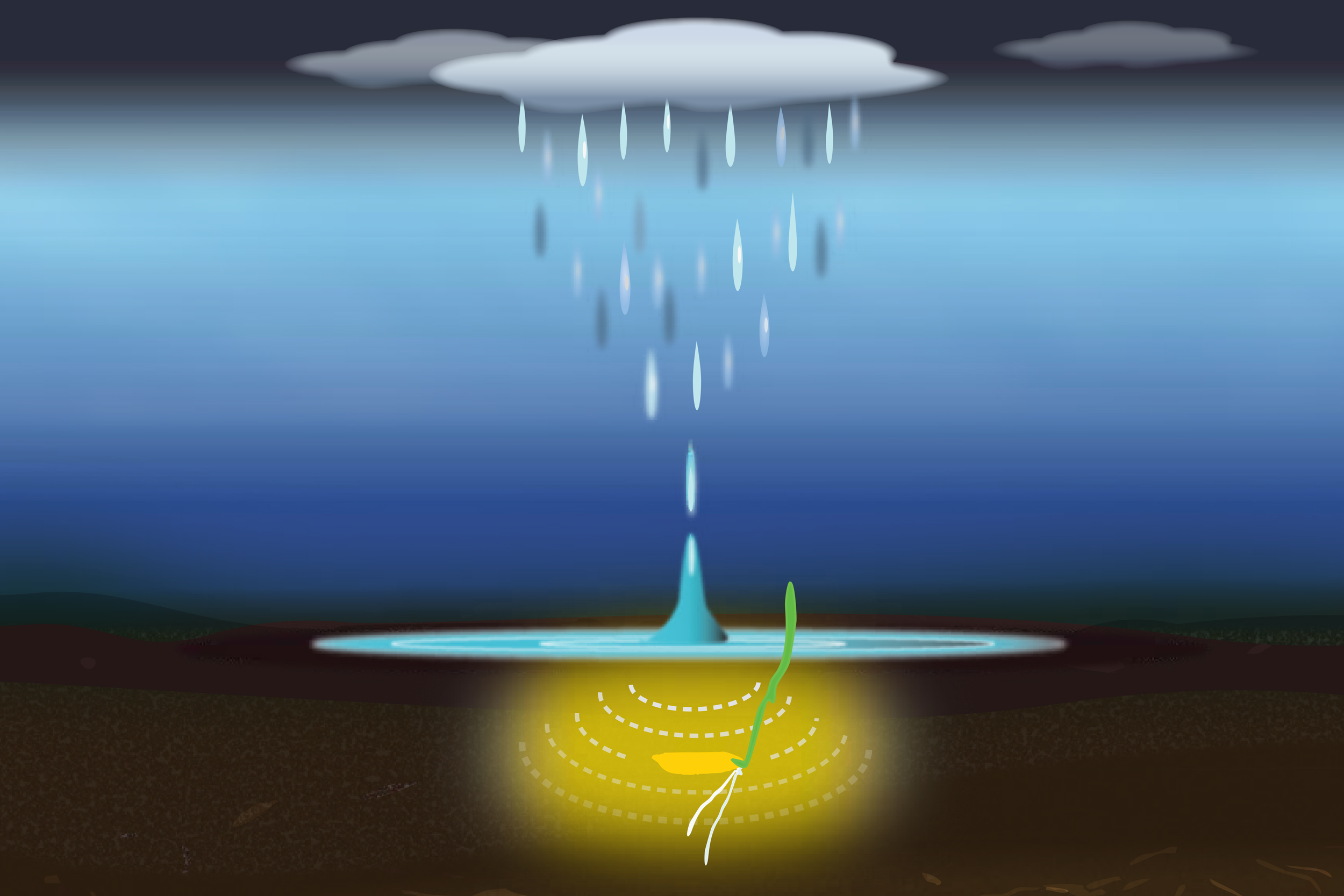
MIT engineers have found that rice seeds can sense the sound of rain through vibrations, which dislodge microscopic statoliths and accelerate germination by 30 to 40 percent. The study provides the first direct evidence that plant seeds can perceive natural sounds and respond biologically. Experiments involved submerging seeds in water and exposing them to rain-like sound vibrations without physical contact from droplets. The mechanism may help seeds determine optimal depth for survival and growth.
Full article excerpt tap to expand
Experiments by MIT engineers show rice seeds sprout faster to the sound of rain. Jennifer Chu | MIT News Publication Date: April 22, 2026 Press Inquiries Press Contact: Abby Abazorius Email: abbya@mit.edu Phone: 617-253-2709 MIT News Office Media Download ↓ Download Image Caption: In experiments with rice seeds submerged in water, MIT researchers found that the sound of falling droplets shook the seeds out of a dormant state, stimulating them to germinate more quickly than seeds that were not exposed to the same sound vibrations. Credits: Credit: Cadine Navarro *Terms of Use: Images for download on the MIT News office website are made available to non-commercial entities, press and the general public under a Creative Commons Attribution Non-Commercial No Derivatives license. You may not alter the images provided, other than to crop them to size. A credit line must be used when reproducing images; if one is not provided below, credit the images to "MIT." Close Caption: In experiments with rice seeds submerged in water, MIT researchers found that the sound of falling droplets shook the seeds out of a dormant state, stimulating them to germinate more quickly than seeds that were not exposed to the same sound vibrations. Credits: Credit: Cadine Navarro Previous image Next image The next time you find yourself lulled by the patter of rain outside your window, think how that same sprinkle might sound if you were a tiny seed planted directly below a free-falling droplet. Would you still be similarly soothed?In fact, MIT engineers have found the opposite to be the case: Some seeds may come alive to the sound of rain. In experiments with rice seeds, the team found that the sound of falling droplets effectively shook the seeds out of a dormant state, stimulating them to germinate at a faster rate compared with seeds that were not exposed to the same sound vibrations.The team’s findings, which are published today in the journal Scientific Reports, are the first direct evidence that plant seeds and seedlings can sense sounds in nature. Their experiments involved rice seeds that they submerged in shallow water. Rice can germinate in both soil and shallow water. The researchers suspect that many similar seed types may also respond to the sound of rain.The team worked out a hypothesis to explain how the seeds might be doing this. They found that when a raindrop hits the surface of a puddle or the ground, it generates a sound wave that makes the surroundings vibrate, including any shallowly submerged seeds. These vibrations can be strong enough to dislodge a seed’s “statoliths,” which are tiny gravity-sensing organelles within certain cells of a seed. When these statoliths are jostled, their movement is a signal for seeds and seedlings to grow and sprout.“What this study is saying is that seeds can sense sound in ways that can help them survive,” says study author Nicholas Makris, a professor of mechanical engineering at MIT. “The energy of the rain sound is enough to accelerate a seed’s growth.”Makris and his co-author, Cadine Navarro, a former graduate student in MIT’s Department of Urban Studies and Planning, suspect that the sound of rain is similar to the vibrations generated by other natural phenomena such as wind. They plan to follow up this work to investigate other natural vibrations and sounds plants may perceive.Sound vibrationPlants are surprisingly perceptive. To help them survive, plants have evolved to sense and respond to stimuli in…
This excerpt is published under fair use for community discussion. Read the full article at MIT News | Massachusetts Institute of Technology.
Discussion
More from MIT News | Massachusetts Institute of Technology