Voters contend with ‘dodgy’ data in party leaflets for English local elections
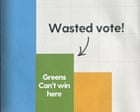
Exclusive: Investigation into campaigning materials for local polls in May challenges tactical voting claims Election leaflets are providing “grotesque” information about how to vote tactically in the May elections, using national polling data, “dodgy” bar charts and doorstep surveys to support claims about parties’ chances of winning. Leaflets distributed by local politicians across England are claiming that only their party can win, or that another party “can’t win here”, when there is no good
Full article excerpt tap to expand
The analysis looked at leaflets claiming that another party ‘can’t win here’. Photograph: electionleaflets.orgThe analysis looked at leaflets claiming that another party ‘can’t win here’. Photograph: electionleaflets.orgLocal elections 2026Voters contend with ‘dodgy’ data in party leaflets for English local electionsExclusive: Investigation into campaigning materials for local polls in May challenges tactical voting claims Alexandra Topping Political correspondent Sun 26 Apr 2026 07.55 EDTLast modified on Sun 26 Apr 2026 12.19 EDTSharePrefer the Guardian on GoogleElection leaflets are providing “grotesque” information about how to vote tactically in the May elections, using national polling data, “dodgy” bar charts and doorstep surveys to support claims about parties’ chances of winning.Leaflets distributed by local politicians across England are claiming that only their party can win, or that another party “can’t win here”, when there is no good evidence to show this is true, a Full Fact investigation for the Guardian has revealed.Some of the campaigning material Full Fact looked at that contained a chart or graphic “failed to provide reliable evidence to back up a specific claim about how people are likely to vote locally, or were unsourced or misleading in some other way”, with examples from all the major parties.Readers who responded to a Guardian callout shared images of leaflets they had received. Some said they had at first thought a leaflet from the Conservatives was from the Green party, because it was printed in green with only a small Conservative logo.View image in fullscreenA Conservative party leaflet. Photograph: Guardian readerAnother expressed doubt about what they described as “very dubious” statistics from the Liberal Democrats showing a party was “the only sensible way to vote”.The polling and political analyst Peter Kellner, a former chair of YouGov, described some of the claims and data used in leaflets as “grotesque” and said spurious claims backed up by unreliable data were becoming increasingly common.“Because there are far more parties, and it is far less clear who you should vote for if you want to vote tactically, all parties are putting a lot of effort into convincing voters that they are the only option,” he said. “But if commercial companies were making some of these claims, they wouldn’t be allowed to get away with it.”Full Fact said good data on voting intentions was often not available in local elections and it was reasonable for political parties to address significant swings in the national polls. But the organisation concluded: “Some of these leaflets could mislead people as they choose how to vote, for instance by claiming definitively that another party ‘can’t win here’ or that only one party can stop another.”Full Fact’s editor, Steve Nowottny, said: “There’s nothing wrong with parties making a case to voters, but too many leaflets are making overblown, dodgy claims with cherrypicked, misleading or unreliable data.”The organisation analysed 331 leaflets from across England uploaded to Democracy Club’s online archive in the first two weeks of April. Fifty-nine included a chart or graphic, with 14 of these unsourced or misleading or failing to provide reliable evidence about voting intention.Among the most egregious examples uncovered in the leaflet analysis was a Labour leaflet distributed in Ealing Common, a ward in west London, that warned voters not to “let Reform sneak in here” and included a…
This excerpt is published under fair use for community discussion. Read the full article at the Guardian.
Discussion
More from the Guardian