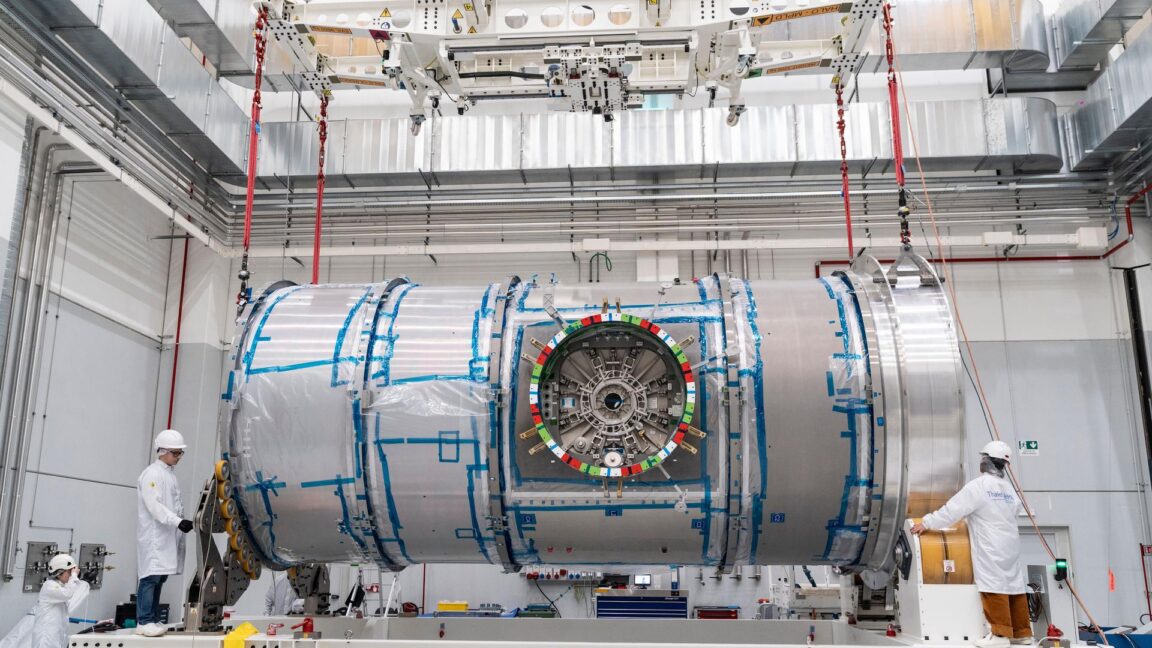
Rocket Report: Artemis III rocket getting ready; SpaceX is now an AI company
"If it doesn’t rely on a solid, there’s no reason why we can’t launch."
Full article excerpt tap to expand
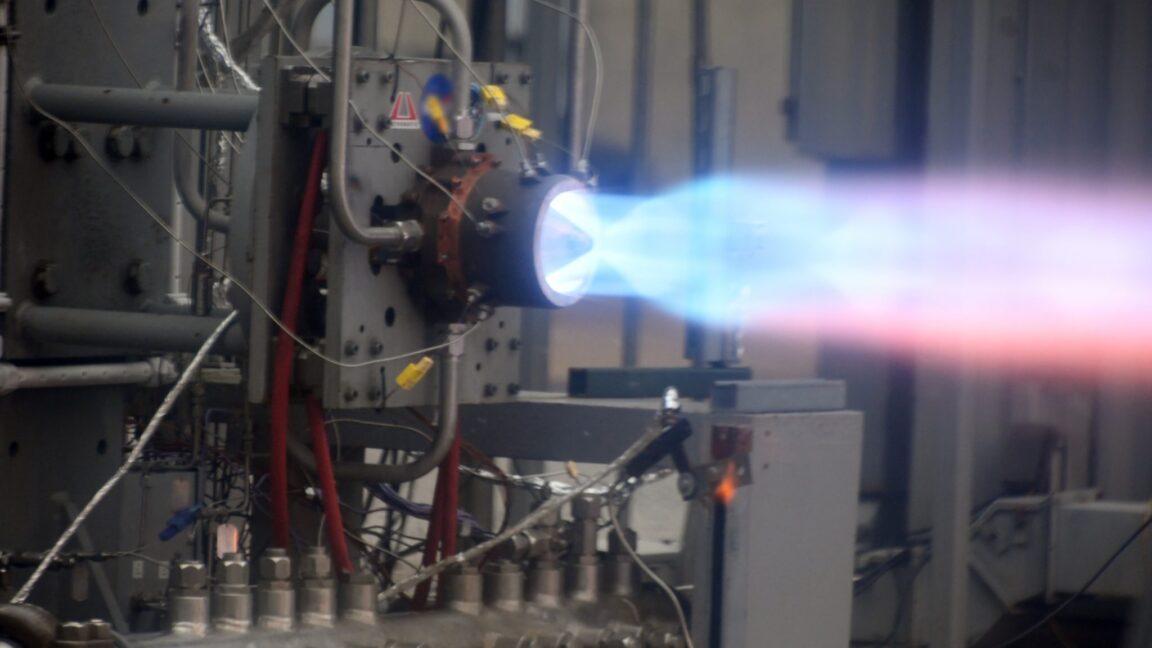
All the news that’s fit to lift Rocket Report: Artemis III rocket getting ready; SpaceX is now an AI company “If it doesn’t rely on a solid, there’s no reason why we can’t launch.” Eric Berger – Apr 24, 2026 7:00 am | 148 Astrobotic said it has successfully hot-fire tested its Chakram rotating detonation rocket engine. Credit: Astrobotic Astrobotic said it has successfully hot-fire tested its Chakram rotating detonation rocket engine. Credit: Astrobotic Text settings Story text Size Small Standard Large Width * Standard Wide Links Standard Orange * Subscribers only Learn more Minimize to nav Welcome to Edition 8.38 of the Rocket Report! The big news this week concerned the third launch of the New Glenn rocket. The first 15 minutes of the flight were exhilarating for Blue Origin, seeing a previously flown rocket take flight and then triumphantly land on a barge at sea. But then the highest of highs was followed by the company’s first loss of an orbital payload, the AST SpaceMobile satellite being injected into a low orbit due to an upper stage failure. We’ve heard it was due to a valve problem, but that would be no scoop as it seems like it’s always the valves that fail in this industry. As always, we welcome reader submissions, and if you don’t want to miss an issue, please subscribe using the box below (the form will not appear on AMP-enabled versions of the site). Each report will include information on small-, medium-, and heavy-lift rockets as well as a quick look ahead at the next three launches on the calendar. Canada’s spaceport plans are not without critics. About a month ago, the Canadian National Defense Minister, David McGuinty, announced an “historic investment” of $200 million over 10 years to Maritime Launch Services for the lease of a dedicated “space launch pad” in Nova Scotia. But some local residents, including Marie Lumsden, are pushing back. Writing in the Halifax Examiner, Lumsden shares a photo of a small concrete pad at the end of a gravel road (the entirety of the spaceport). The residents have formed a group, Action Against the Canso Spaceport, because they have “genuine concerns about this project and the people behind it.” A litany of concerns … The article outlines some of the organization’s concerns about the spaceport, Maritime Launch Services, and a “revolving door” of team members. There are also questions about an environmental assessment by the Nova Scotia Environment and Climate Change regarding the environmental risks of launching a Ukrainian rocket with a mix of UDMH/LOX/kerosene fuels. “This project was approved by an utterly inappropriate and broken environmental assessment process whose outcome, despite the outcry of NSECC staff, is determined by lobbyists, unscrupulous proponents, and their friends in high political places,” Lumsden. (submitted by Adapheon) Rocket Lab launches “origami” satellite. An Electron rocket on Thursday launched the Japanese space agency’s Innovative Satellite Technology Demonstration-4 mission, which aims to test advanced space tech developed by startups and universities, The Independent reports. Among the payloads was a small 10 cm cube that unfolds to a 2.5-meter array. A lot of unfolding … Rocket Lab’s name for the mission, its second for JAXA, was “Kakushin Rising.” JAXA describes the 10cm cube as “an unprecedentedly lightweight and highly packable deployable array antenna for space, with antenna elements attached to a two-layer deployable membrane that can be…
This excerpt is published under fair use for community discussion. Read the full article at Ars Technica - All content.
Discussion
More from Ars Technica - All content